
BEYOND THE MARKS: HOW DO WE KNOW LEARNING IS ACTUALLY HAPPENING? -Rethinking Outcome-Based Education from Measurement to Demonstrated Capability
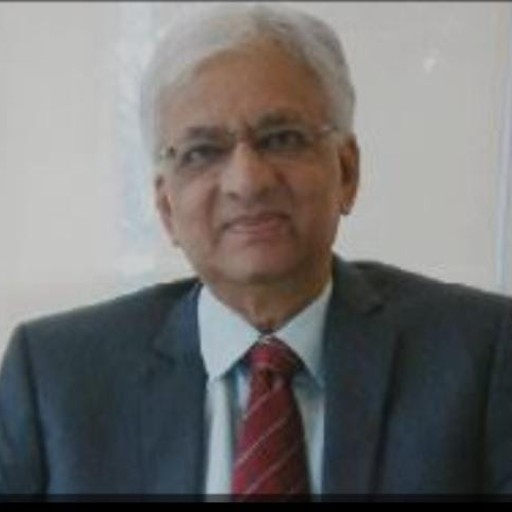
By Dr. Suresh Mony · 4 Sept 2026 · 12 views · edited 10 Sept 2026
At the recent Beyond Accreditation 2026 conference, organised by STUDIUM, I participated in a panel discussion under the theme “Academic Intelligence & Outcome-Based Education.” One question posed by the moderator has stayed with me:
"If someone asked you, ‘How do you know learning is actually happening at your institution?’, what evidence would you point to beyond examination results or grades?”
It is a deceptively simple question. Over the years, higher education institutions have invested considerable effort in implementing Outcome-Based Education (OBE). We have articulated Graduate Attributes, Programme Outcomes (POs), Course Outcomes (COs), mapping matrices, assessment tools, attainment calculations and dashboards. Yet I believe we need to pause and ask a more fundamental question:
Do these measurements actually tell us whether learning has taken place?
THE PILOT TEST
Imagine that we are certifying a pilot. Would we certify the pilot's flying competence because he or she has scored 80% in a written examination?
Obviously not.
The pilot has to demonstrate the ability to take off safely, navigate, respond to changing weather conditions, handle contingencies and land safely. The pilot must demonstrate competence in each of these critical capabilities. A written examination may provide evidence of knowledge, but an 80% score cannot, by itself, establish that the person can actually fly an aircraft.
Why should demonstrating competence in higher education be fundamentally different?
Yet we have become comfortable reporting that an institution has a 95% pass rate or that 80% of its COs and POs have been “attained.” Such numbers may tell us something about examination performance, but they do not necessarily tell us what students can actually do.
The persistent gap between graduation and employability should itself make us question whether our assessment systems adequately measure the capabilities graduates are expected to demonstrate in the workplace.
WHEN ATTAINMENT BECOMES A NUMBER
Many institutions now calculate CO and PO attainment using predetermined performance thresholds. For example, an institution may define:
Level 1: 60% of students achieve ≥50%
Level 2: 70% achieve ≥60%
Level 3: 80% achieve ≥70%
There is nothing inherently wrong with having thresholds. The problem arises when crossing a marks threshold becomes synonymous with demonstrating a complex learning outcome.
Consider a CO:
“Evaluate alternative business strategies and justify the recommended strategy.”
A student obtains 55/100. Under a conventional threshold system, this may contribute to CO attainment.
But did the student actually demonstrate:
the ability to evaluate alternatives?
comparison using appropriate criteria?
evidence-based judgement?
the ability to justify the recommendation?
We do not know. The 55% is not the outcome. Nor is Level 1 attainment necessarily evidence that the outcome has been demonstrated. The outcome is the capability demonstrated by the student.
This leads to the fundamental question:
Are we measuring attainment of the outcome—or merely counting students who crossed a marks threshold?
The distinction is profound.
A marks-based attainment report may tell us that a predetermined proportion of students crossed a predetermined line. It does not necessarily tell us whether the assessment genuinely measured the CO, which dimensions of the CO were weak, why students failed to demonstrate them, whether higher-order capability was demonstrated, or what should change in teaching and learning.
FROM MEASURING MARKS TO DEMONSTRATING CAPABILITY
If OBE is to fulfil its promise, we need to shift from marks to demonstrated capability.
Instead of asking only how many students crossed a threshold, we should ask:
What capability has each student demonstrated, to what level, and what evidence supports that judgement?
This requires assessment rubrics that describe levels of performance.
For example:
| Capability | 0 – Not Demonstrated | 1 – Developing | 2 – Proficient | 3 – Advanced |
| Analyse alternatives | Cannot identify or meaningfully analyse alternatives | Identifies alternatives but analysis is superficial | Analyses relevant alternatives using appropriate criteria | Integrates alternatives and identifies significant trade-offs |
| Evaluate alternatives | Cannot meaningfully compare alternatives | Makes a limited comparison | Evaluates using relevant evidence and criteria | Provides nuanced evaluation considering risks and consequences |
| Justify recommendation | Unsupported recommendation | Limited reasoning | Logical, evidence-supported justification | Compelling justification addressing counterarguments |
The important point is that Level 2 does not mean 60 marks. It describes what the student can actually do.
A student may therefore be:
Level 2 in analysing alternatives;
Level 1 in evaluating them; and
Level 1 in justifying the recommendation.
This is far more useful information than a single score of 55%. It tells the faculty where the capability gap lies and what needs to be improved.
Assessment should therefore diagnose, not merely declare.
The conventional sequence is:
Assessment → Marks → Threshold → CO Attainment → Report
The OBE-oriented sequence should be:
Assessment → Evidence → Diagnosis → Intervention → Re- demonstration → Improvement
This is the difference between measuring academic performance and demonstrating learning outcomes.
SPADY AND THE PRINCIPLE OF EXPANDED OPPORTUNITY
This approach also resonates strongly with William Spady's foundational thinking on OBE: “all students can be successful learners, but not necessarily at the same pace or in the same manner”.
His three central principles are particularly relevant:
Clarity of Focus: Students should know what they are expected to learn and demonstrate.
Expanded Opportunity: Students should be provided sufficient opportunities, time and appropriate pedagogies to demonstrate the outcomes.
High Expectations for All: We should retain high expectations for every learner rather than accepting low attainment as inevitable.
This changes our conception of assessment. If a student does not demonstrate a CO on the first attempt, should that necessarily be the end of the learning process?
Why not: Feedback → Coaching → Practice → Re-demonstration?
A student who requires two or three attempts to demonstrate a capability should not necessarily be regarded as less capable than one who succeeds on the first attempt. The Chartered Accountancy profession, for example, illustrates how candidates may take different numbers of attempts to clear the examination, while successful candidates ultimately meet the same professional standard.
The objective, therefore, is not to make every student score 80%.
The objective is to move every student from “Not Demonstrated” towards the defined level of proficiency.
This is much closer to the spirit of OBE.
A NEW OPPORTUNITY THROUGH AI
Artificial Intelligence may actually accelerate this transition. If AI can now generate reports, analyse cases, write essays and solve complex problems, merely asking students to produce another written assignment increasingly tells us less about what the student personally knows or can do.
But AI can also help us create authentic opportunities for demonstration.
Imagine an AI-enabled leadership simulation in which the student has to deal with a resistant colleague, a demanding customer, a CFO concerned about costs and an operations manager facing capacity constraints. The student has to listen, negotiate, make decisions and justify them.
A rubric can assess:
listening;
influence
decision-making
conflict management
adaptability
ethical reasoning.
Similarly, AI could present an ethical dilemma and progressively challenge the student's reasoning:
- What would you do?
- What if your decision affects 200 employees?
- What if your CEO asks you to remain silent?
- What if the action is technically legal but ethically questionable?
This allows us to observe how students think and exercise judgement, rather than simply whether they can reproduce what they have read.
- AI should not, however, be allowed to certify leadership, integrity or ethical character on its own. Its evidence should be triangulated with faculty observation, peer assessment, authentic projects, reflection and other forms of 360-degree assessment.
The promise of AI in assessment is therefore not merely that it can mark more papers. It is that it may enable us to create many more opportunities for students to demonstrate capabilities that were previously difficult to observe at scale.
FROM CLOSING THE REPORT TO CLOSING THE LEARNING LOOP
This brings us to the larger issue of Assurance of Learning and continuous improvement.
For me, closing the loop is not an Action Taken Report stating:
“CO attainment was below target; remedial classes were conducted.”
That records an action. It does not necessarily demonstrate improvement.A genuine learning loop should be:
Assessment Evidence
↓
Root Cause Analysis
↓
Identify the actual cause
↓
Intervention
↓
Re-demonstration
↓
Evidence of ImprovementThe root cause could lie in one or more of the following:
inadequate knowledge;
insufficient skill;
attitude;
inappropriate pedagogy;
insufficient practice;
inadequate learning opportunity;
poor assessment design;
incorrectly articulated CO.The critical question is not simply:
“What action did we take?” BUT:
“What did the evidence tell us, what was the root cause, what did we change, and did that change improve learning?”
That is genuine closing of the loop.THE QUESTION WE NEED TO ASK
I am not arguing that marks, examinations or attainment calculations should disappear. They have an important place in higher education.
My concern is that we have allowed the measurement mechanism to become a substitute for evidence of learning.We need to move:
from measuring scores to observing capabilities;
from one-shot assessment to expanded opportunities;
from reporting attainment to diagnosing gaps;
from remedial action to root-cause-based intervention;
and ultimately,
from closing the report to closing the learning loop.
The real test of OBE is therefore deceptively simple:
Can we show, with credible evidence, what our graduates are actually capable of doing?
Perhaps that is the question we should ask before we ask how many marks they obtained.
ABOUT THIS SERIES
This article is the first in a proposed series emerging from the discussions at Beyond Accreditation 2026. The intention is to stimulate a conversation on how we can move from compliance-oriented measurement to meaningful evidence of learning and continuous improvement in higher education.
0
Discussion
0 comments