
The Ultimate NIRF 2025 Readiness Checklist: Introducing India's First Data-Backed NIRF Strategy Framework
By Studium Tech Pvt Ltd · 8 Aug 2026 · 35 views
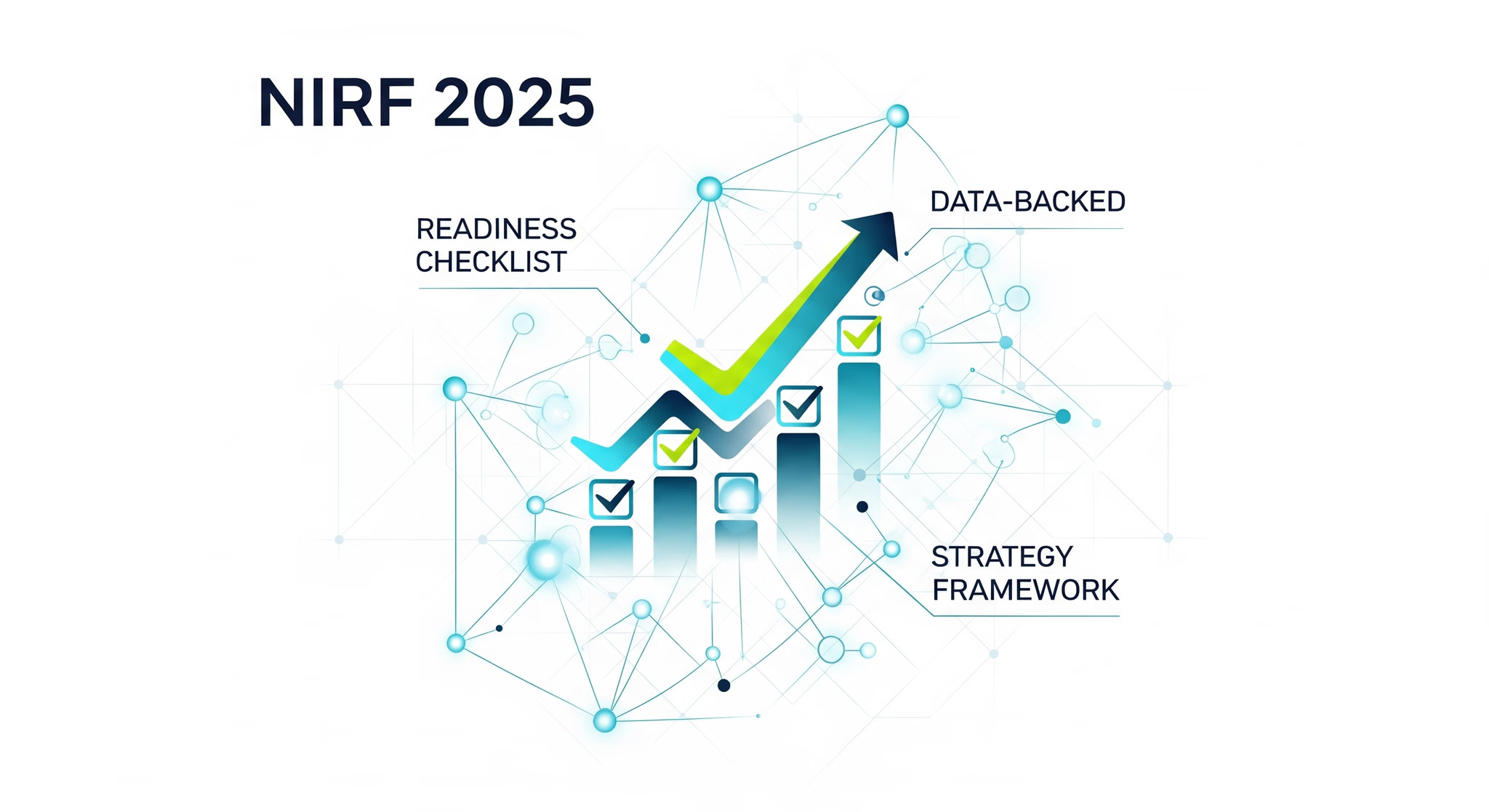
In this blog, we share a simplified 10-step checklist based on this framework to ensure your college or university is ready for NIRF 2025.
1. Centralize Your NIRF Data
- Build a single-source dashboard with all parameter inputs
- Eliminate manual spreadsheets and legacy formats
- Use cloud-based access for multi-department collaboration
Tool Tip: Use AI-powered NIRF analytics tools to collect and clean data automatically.
2. Set Department-Wise Ownership and Roles
- Assign KPIs for Teaching, Research, Outreach, and Perception
- Make HoDs accountable for parameter-level progress
- Track updates monthly with role-based dashboards
Why It Works: Institutions with decentralized ownership score higher in consistency and accuracy.
3. Benchmark Against the Right Peers
- Compare your metrics with the top 100 in your stream
- Use national medians for realistic goal-setting
- Analyze regional competitors to discover local differentiators
Insight: Institutions that benchmark strategically improve faster than those that don’t.
4. Prioritize Parameters With Highest Impact
- Identify underperforming metrics with the biggest scoring weight
- Allocate resources to faculty hiring, research grants, and diversity initiatives
- Create a 3-month and 6-month tactical improvement plan
Pro Move: Use scoring simulators to forecast the rank impact of each improvement.
5. Review Research Productivity Quarterly
- Track citations, publications, and funded projects by department
- Align faculty appraisal metrics with research goals
- Curate your best-performing research for visibility campaigns
Bonus: Sync this data with NAAC Criterion 3 and NBA research PO outcomes.
6. Optimize Placement and Graduate Outcome Metrics
- Audit placement data for median salary accuracy
- Connect with alumni to verify entrepreneurship and career progression
- Collaborate with departments to bridge curriculum-to-job gaps
Recommended Tool: Alumni360 for AI-driven career outcome tracking.
7. Drive Inclusivity and Outreach Efforts
- Analyze gender, caste, and regional diversity metrics
- Improve scholarships and policy transparency
- Conduct events in Tier 2 and Tier 3 cities to boost reach
Why It Matters: Outreach & Inclusivity is often underleveraged despite being high-impact.
8. Build a Perception Strategy
- Map your media mentions, industry collaborations, and academic MoUs
- Activate your top-performing alumni and research leaders
- Promote institution-wide wins strategically
Insider Insight: Perception is one of the easiest-to-influence but least-used levers.
9. Sync NIRF With NAAC/NBA/UGC Workflows
- Reuse cleaned NIRF data in SSR, AQAR, and DVV formats
- Map NIRF scores to NAAC Criteria 2, 3, 5, and 7
- Align NIRF planning with your Institutional Development Plan (IDP)
Efficiency Tip: Accreditation-ready NIRF tools like InsightNIRF cut preparation time in half.
10. Monitor Progress Monthly. Not Annually.
- Conduct a monthly NIRF review with IQAC and Deans
- Use real-time analytics to update targets
- Turn your NIRF strategy into a living dashboard
Leadership Shift: Great institutions don’t manage NIRF. They live it.
Conclusion: The NIRF 2025 Readiness Era Has Begun
Compliance is no longer enough. To win in NIRF 2025, institutions must be strategic, data-driven, and proactive.
Studium's NIRF Analysis Framework is built on two years of ground-level research, real NIRF data, and deep collaboration with forward-thinking Indian universities. It powers InsightNIRF—the best NIRF software for colleges ready to outperform, not just submit.
Ready to Get NIRF-Ready?
1
Discussion
0 comments