
Times of India · 11 Aug 2026
Access and quality in higher education entwin
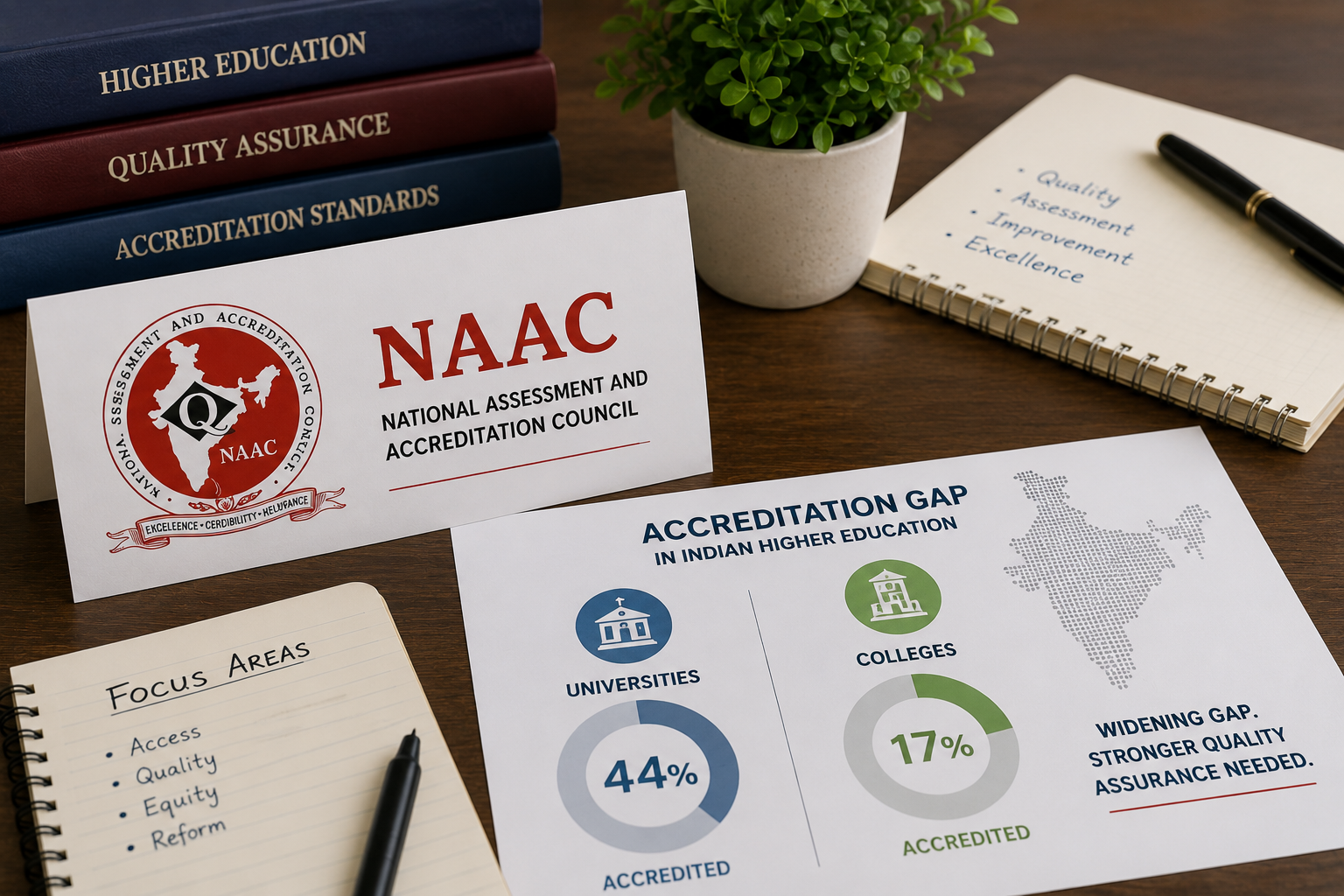
NAAC highlighted the continuing gap between access and quality across India's higher education system and emphasised the role of accreditation in strengthening institutional quality. The article discusses efforts to expand accreditation coverage while developing a new framework that includes binary accreditation and Maturity Based Graded Levels. The proposed approach is intended to simplify the accreditation process and enable institutions to demonstrate progressive improvements in quality.
Why it matters
The accreditation gap is significant because India's higher education system has expanded rapidly while formal quality assessment has not reached all institutions equally. Limited accreditation coverage means that a large number of colleges and universities have not yet undergone a structured external assessment of their institutional processes and academic quality.
The proposed move towards binary accreditation and Maturity Based Graded Levels could make the accreditation system more accessible while creating a pathway for institutions to demonstrate progressive development. This could be particularly important for institutions that may find a comprehensive accreditation process difficult to undertake under existing arrangements.
At the same time, expanding accreditation coverage needs to be accompanied by credible assessment and meaningful institutional improvement. Accreditation is most valuable when the assessment process helps institutions identify weaknesses, strengthen academic systems and improve outcomes rather than becoming primarily a compliance exercise.
The discussion therefore reflects the broader challenge facing Indian higher education: expanding access while ensuring that growth is accompanied by consistent and measurable improvements in quality.
Source: Times of India (opens in a new tab)
Filed under
NAAC Accreditation Excellence1